In sheet metal bending, tooling standards and interfaces directly determine production compatibility, accuracy, and efficiency. For both manufacturers and end users, understanding the most widely used press brake tooling standards helps in selecting the right punches and dies, avoiding mismatches, and improving overall productivity.
Below is an analysis of the five most common industry standards and their interface features:
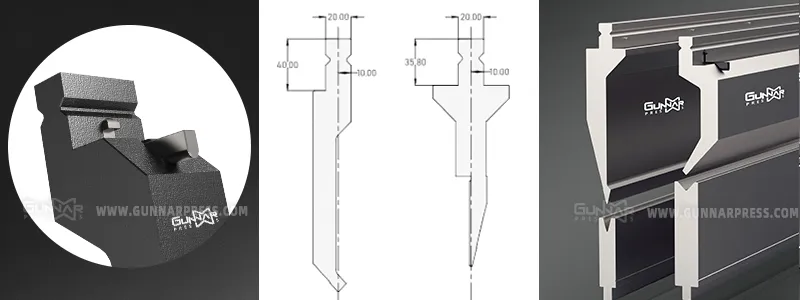
1. Amada Standard
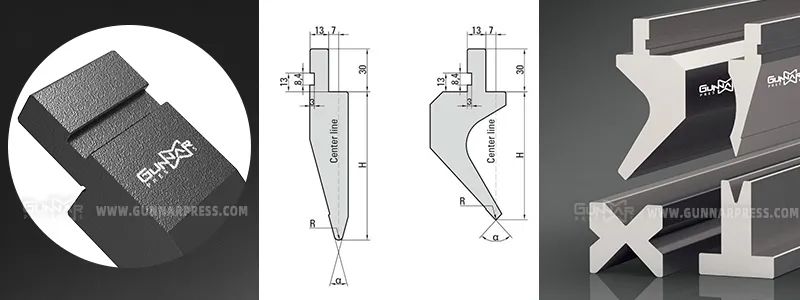
Interface Type: Dovetail slot / Rectangular shoulder
Punch Interface: Common heights 85mm or 90mm, dovetail slot width 13mm, fixed by wedges or bolts.
Die Interface: T-slot or dovetail slot, width 12–13mm.
Features:
Lightweight, easy to install and remove.
Mainly used on small and medium-sized press brakes.
High interchangeability thanks to standardized heights and interfaces.
Representative Machines: Amada, Japanese, Taiwanese, and most small to mid-size Chinese press brakes.
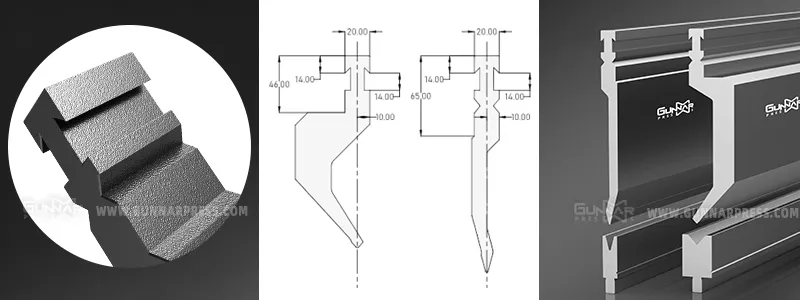
2. Trumpf / Wila Standard
Interface Type: Precision flat surface + self-locking wedge / quick clamping system
Punch Interface: Standard height 231mm, 20mm dovetail slot with locating groove, self-positioning.
Die Interface: Flat base, usually 60mm or 90mm wide, fixed by quick clamps.
Features:
High-precision interface, supports hydraulic or pneumatic quick clamping.
Self-positioning grooves ensure repeatability.
Modular structure, ideal for quick tool changes.
Representative Machines: Trumpf, Bystronic (partially), LVD, Durma, and other high-end European press brakes.
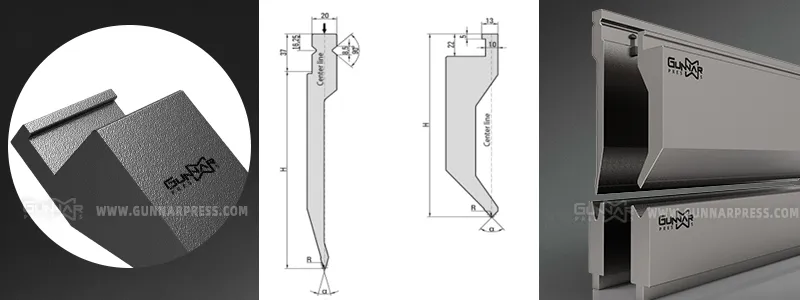
3. Bystronic Standard
Interface Type: Similar to Wila but with unique slot geometry.
Punch Interface: 231mm height, similar to Wila but with slightly different clamping design.
Die Interface: 90mm wide slots, mostly compatible with Wila, but some dedicated tooling is exclusive to Bystronic machines.
Features:
Proprietary design for Bystronic machines.
Interchangeable with Wila to a large extent, but not 100% universal.
Representative Machines: Bystronic press brakes.
4. LVD Standard
Interface Type: Dovetail slot + locating pins
Punch Interface: Common height 231mm, similar to Wila but with different dovetail width and pin positions.
Die Interface: 60–90mm wide, with pin holes to prevent lateral movement.
Features:
Proprietary system with partial Wila compatibility.
Stronger focus on die stability.
Representative Machines: LVD press brakes.
However, these differences in standards often create challenges: when a factory owns machines from multiple brands, it usually has to purchase several sets of tooling, which increases investment and management costs.
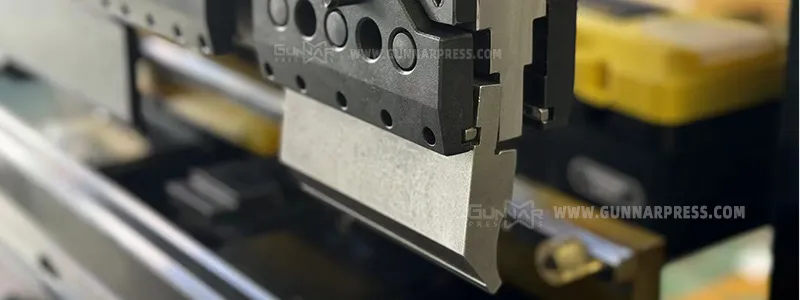
The GUNNARPRESS Press Brake Tooling Adapters are designed to solve this problem. With high-precision interface conversion, they allow Amada tooling to be used on Wila press brakes, or enable interchangeability between different systems. This not only improves flexibility but also reduces redundant purchases, saving costs.
Strong compatibility: Supports interchange between Amada, Trumpf, Wila, and other major systems.
High precision: Machining accuracy within ±0.01mm ensures bending accuracy.
Cost savings: Eliminates the need to purchase multiple sets of tooling.
High flexibility: Perfect for workshops operating multiple brands of press brakes.
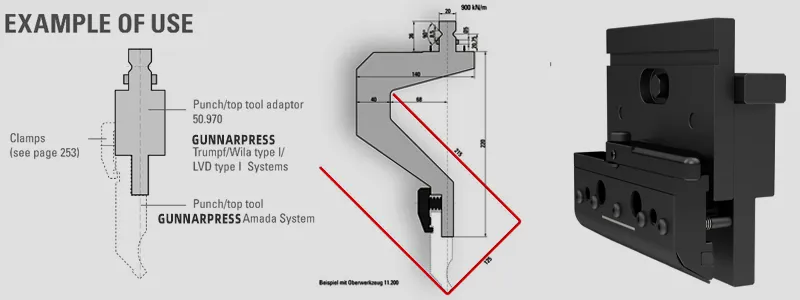
Adapters are widely used in factories with several different press brake brands. For example, a factory running Amada machines but wanting to adopt Wila’s durable tooling can easily achieve this through adapters, enabling a unified tooling management system and enhancing production efficiency.
Many customers still ask: If it’s already an Amada standard interface, why do we still need adapters or distance pieces?
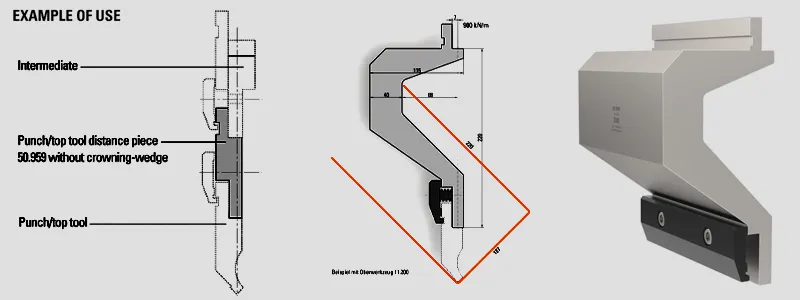
In fact, these adapters play an essential role in bending production:
Tolerance Compensation
Even within the same standard, different machine models and production years may have slight deviations. Adapters correct these differences to ensure stable clamping.
Enhanced Flexibility
Adapters allow operators to adjust tool height or spacing for different workpieces, enabling versatile bending without investing in additional custom tooling.
Precision Assurance
With finely ground surfaces, adapters maintain perfect punch–die alignment and parallelism, preventing angle deviations and ensuring consistent results.
High Load Capacity
Made from high-strength steel (e.g.,42CrMO), adapters withstand loads up to 900 kN/m, guaranteeing durability and stability even in heavy-duty bending.
adapters are not just “interface pieces” — they are critical components for aintaining precision, flexibility, and reliability in press brake operations.
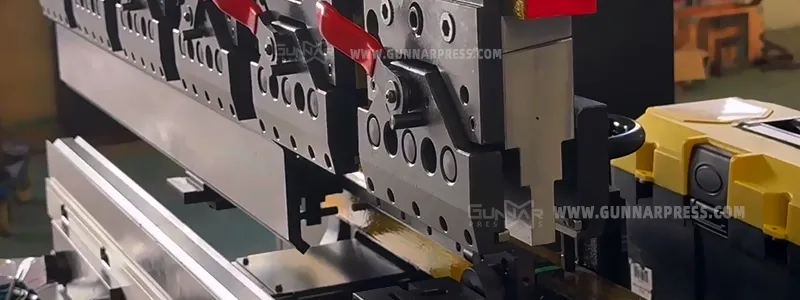
GUNNARPRESS adapter can not only solve the differences between different press brakes and press brake dies, but also solve the problems between press brakes and press brake dies of the same brand.