In the field of sheet metal processing, the hardness of press brake tooling is always a key concern for customers. Many believe that “higher hardness means longer tool life,” but the reality is not that simple. Hardness is not the sole criterion for evaluating tool quality, and excessively high hardness can even have negative effects.
1. The Relationship Between Hardness and Wear Resistance
After quenching, tempering, or surface treatment, tooling hardness increases significantly. This indeed improves wear resistance, allowing the tooling to maintain good forming accuracy during long-term bending.
For example, 42CrMo steel tooling, after proper heat treatment, can reach a hardness range of HRC 48–52, making it capable of withstanding high-tonnage bending operations.
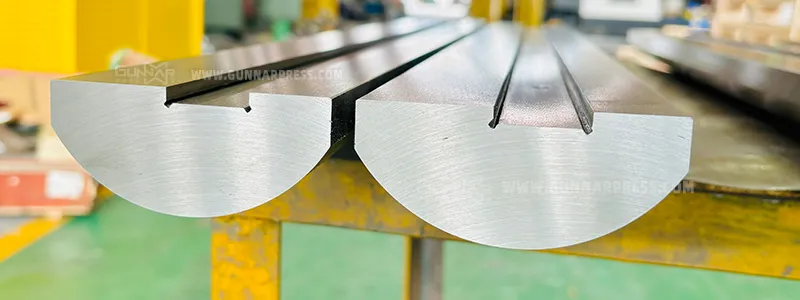
(Custom Radius Punches:Two different punch heads were made: one with a R66.5 mm radius and another with a R60 mm radius)
2. The Risks of Excessive Hardness
Increased brittleness: Tooling with excessive hardness is more prone to cracking, especially when bending high-strength sheets or under misoperation, where cracks may spread quickly and cause tool failure.
Reduced adaptability: In applications that require complex bending or deep box-shaped components, overly hard tooling may lack toughness to withstand impact loads.
Higher maintenance cost: Once damaged, excessively hard tooling is much more difficult to regrind or repair, resulting in higher costs.
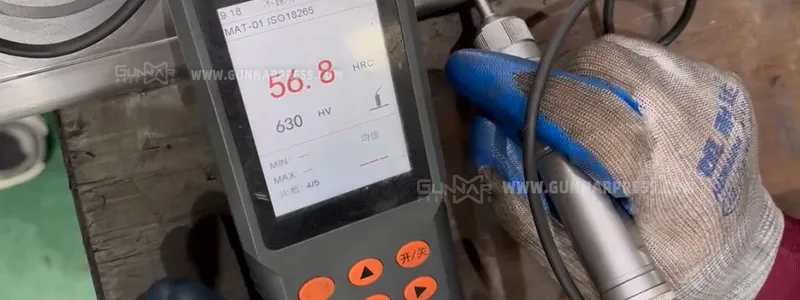
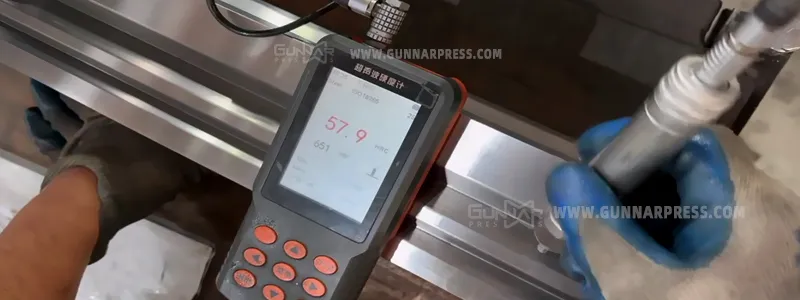
(Hardness testing prior to shipment)
3. Balancing Hardness and Toughness
The ideal press brake tooling is not “the harder, the better,” but rather achieving the right balance between hardness and toughness.
Upper punches generally require sufficient hardness for wear resistance, while maintaining toughness to prevent breakage.
Lower dies, which endure greater impact forces, demand higher toughness and usually do not pursue extreme hardness.
In actual production, tooling is often manufactured with overall tempering + partial quenching + surface coating, ensuring both durability and safety.
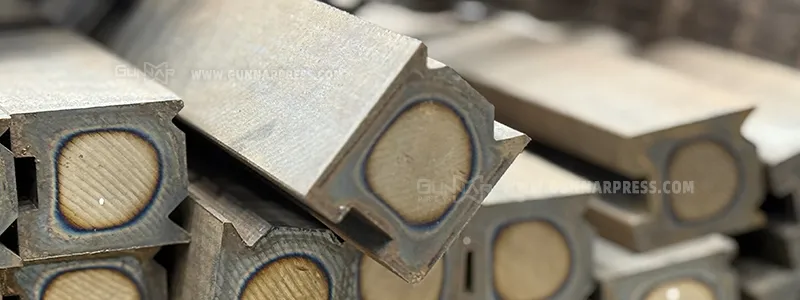
(CNC depth hardened for work part 3-5mm)
Therefore, tooling hardness is not about maximizing hardness but finding the right balance among hardness, toughness, wear resistance, and process adaptability. Choosing the right hardness not only extends tooling life but also improves bending accuracy and production efficiency.
Why 42CrMo is Widely Used in Press Brake Tooling
In press brake tooling manufacturing, material selection directly affects tool life, performance, and machining stability. Common tooling steels include T8, T10, Cr12, 9CrSi, and 42CrMo. Among them, 42CrMo is widely used for high-strength and wear-resistant tooling due to its outstanding overall performance.
1. High Strength with Toughness
42CrMo is a high-quality alloy structural steel. After tempering, it features a combination of high strength and toughness.
Resistant to cracking under high-tonnage bending;
Excellent impact resistance, suitable for processing high-strength steel sheets and stainless steel.
2. Excellent Wear Resistance
Through quenching and tempering, 42CrMo tooling hardness usually reaches HRC 48–52. This hardness range ensures wear resistance while avoiding excessive brittleness, allowing tooling to maintain stable accuracy for long periods and reduce replacement frequency.
3. Superior Machinability
Compared with high-carbon high-chromium steels (such as Cr12), 42CrMo offers better machinability and less deformation during heat treatment. This improves cutting efficiency and makes it well-suited for customized tooling production.
4. Stable Heat Treatment Performance
42CrMo has good hardenability and tempering stability, making it suitable for vacuum heat treatment, overall tempering, surface nitriding, or coating. These processes allow manufacturers to achieve different performance combinations based on customer requirements.
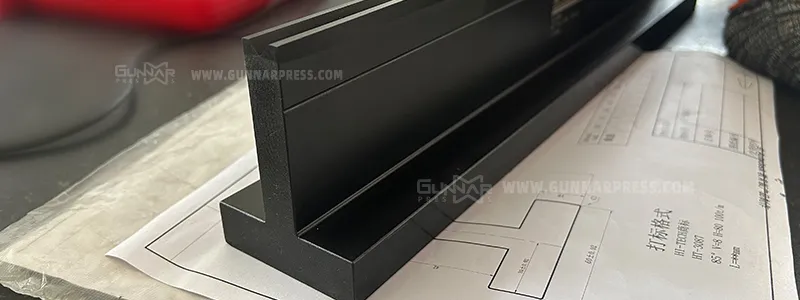
(Custom Coated Single V Die)
5. Long Service Life and High Cost-Performance
With both strength and wear resistance, 42CrMo tooling lasts significantly longer than ordinary carbon steel tooling.
Compared to imported premium tooling steels, 42CrMo offers excellent cost-performance advantages.
| Material | Hardness (HRC) | Toughness | Wear Resistance | Machinability | Cost | Typical Applications |
| T8 Carbon Tool Steel | 50–55 (after quenching) | Low | Medium | Good | Low | General sheet bending, light-duty tooling |
| Cr12 High Carbon High Chromium Steel | 58–62 | Low (brittle) | High | Poor (difficult to machine) | Medium-High | Mass stamping, heavy wear conditions |
| 42CrMo Alloy Steel | 48–52 (after tempering) | High | High | Excellent | Medium | High-strength steel, stainless steel bending, medium- to heavy-duty tooling |
Table Insights
T8 Carbon Tool Steel
✔ Lowest cost option, suitable for general sheet processing.
✔ Short lifespan and not recommended for high-strength materials.
Cr12 High Carbon High Chromium Steel
✔ Excellent wear resistance, ideal for high-volume production.
✔ Brittle with higher processing and maintenance costs.
42CrMo Alloy Steel
✔ Best overall balance of strength, toughness, and wear resistance.
✔ Widely used in press brake tooling, especially for bending stainless steel and high-strength plates.
As a press brake tooling material, 42CrMo strikes a perfect balance of strength, toughness, wear resistance, and machinability, making it especially suitable for medium- and high-tonnage bending applications. It not only meets the forming needs of complex parts but also extends tooling life and reduces production costs.
At GUNNARPRESS, we select premium 42CrMo material and apply advanced heat treatment and surface coating technologies to provide customers with high-performance tooling solutions. Every set of tooling is designed to deliver both durability and safety.
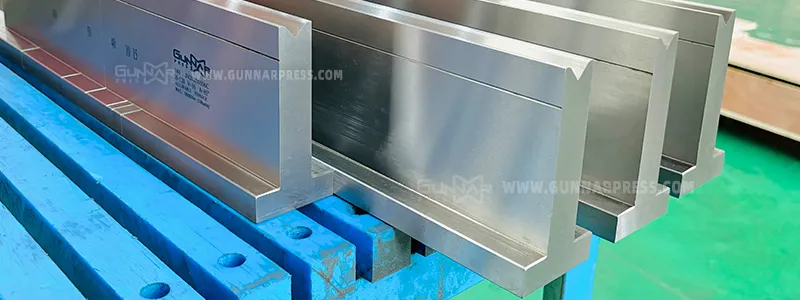
(Custom Single V Die)
If you are considering custom press brake tooling, feel free to contact us for tailored solutions.